
Key takeaways
- A ceramic coating maintenance wash is a pH-neutral, two-bucket or foam pre-wash routine done every two to four weeks to protect the coating and its warranty.
- Coating makers usually make aftercare a condition of the warranty, so put the routine in writing at handover.
- Customers should rinse the same day after bird lime, tree sap, pollen, road salt, or fuel spills, with no shampoo needed.
- A maintenance wash needs five products: pH-neutral shampoo, two buckets with grit guards, a plush mitt, a large drying towel, and a silica booster spray.
- Sending a booking link with a deposit at handover turns aftercare reminders into booked, no-show-resistant repeat work.
What is a ceramic coating maintenance wash?
A maintenance wash is a regular, low-contact wash using pH-neutral shampoo, done on a set interval, that keeps the coating beading and protects the customer's warranty. It is not a full decontamination detail: no clay bar, no machine polish, no chemical strip. The goal is to lift traffic film and grime before they bond, so the coating does the work it was applied to do.
Most coating brands make aftercare part of the warranty itself, so skipping washes or using the wrong products can void the cover. Always check the exact wording for the product you apply and pass it on to the customer.
For you, that routine is also the natural hook for repeat bookings. A customer who has just paid for a full valet or a coating needs the same wash every few weeks, and your diary should reflect that. If you are rescheduling around weather anyway, read how rain and cold affect mobile jobs: weather and rescheduling for mobile detailers.
Why should you give customers a written wash routine?
Protecting your coating warranty in writing
A coating warranty usually has conditions: proper wash intervals, no automatic car washes, approved chemicals. If a customer returns six months later blaming swirl marks on your work, a messaged routine is your evidence they were told the rules. Without it, you are arguing DMs versus memory. Put the routine in writing, send it the day you finish the job, and ask for a quick thumbs-up so there is a record.
Turning aftercare into repeat bookings
The same handout is your upsell. Every wash instruction is a chance to say "or book me to do it" and attach your booking link with a deposit to hold the slot. That is how a one-off full valet becomes a monthly diary entry. Tools like DetailersEye let you set deposits and take repeat bookings without platform fees, so the aftercare work you recommend actually lands in your calendar.
How often should a ceramic coated car be washed?
Give every customer the same baseline: a maintenance wash every two weeks for a daily driver, stretching to four weeks for a garaged weekend car that rarely goes out. Set the rule per customer based on where the car actually lives and how far it drives, and check it against the coating maker's guidance. Coatings are sacrificial, so contamination left sitting becomes the coating's problem instead of the paint's.
Situations that need an immediate rinse
Tell customers to rinse the same day, no shampoo needed, if any of these land on the coating:
- Bird lime (it can etch within hours in sun)
- Tree sap or pollen
- Road salt after winter driving
- Fuel spills at the pumps
A rinse from a safe distance handles all four. When they do wash, a pH-neutral shampoo and the two-bucket method protect the coating. Put the intervals in writing so the customer knows the schedule is part of the warranty, not a suggestion.
What products does a maintenance wash actually need?
Five categories cover it: pH-neutral shampoo, two buckets with grit guards, a plush wash mitt, a large drying towel, and a silica booster spray. Keep the list short so customers actually buy it.
Name brands, not categories. Write "use X shampoo, Y mitt, Z towel" on your handout, because a customer handed "pH-neutral shampoo" will grab whatever's on the shelf at the supermarket. Naming products also means every wash reminds them who told them what to buy, and makes it easier to sell them the bottle from your own stock.
Products to tell customers to avoid
No automatic brush washes, no traffic-film removers, no wheel acids, no cheap shampoo with added wax, and no terry towelling anything. Put the banned list on the same page as the approved one. If you're still juggling DMs and a spreadsheet, a booking link with deposits holds the slots these washes fill (see how to stop no-shows).
The wash sequence, step by step
Copy this straight into a WhatsApp or DM. It reads in about a minute and covers the full ceramic coating maintenance wash from wheels to dry.
Wheels and arches
Wheels first, always, before the body touches a mitt. Rinse the arches and tyres, then clean the wheels with a dedicated wheel brush and bucket. Never dip that mitt or brush back into bodywork water.
Contact wash
Pre-rinse the whole car top-down to lift loose grit. Then wash with the two-bucket method: one bucket with shampoo, one with plain water for rinsing the mitt. Work top-down, panel by panel, straight-line motions, rinsing the mitt often. Fold the mitt to a fresh face as it picks up dirt.
Rinse each panel before moving to the next so shampoo never dries on the paint. Finish with a sheeting rinse: take the nozzle off and let water flow over the panels so it sheets off and carries most of the droplets with it. This order matters more than the brand of shampoo, because a ceramic coating maintenance wash is really about keeping grit off the coating, not adding anything to it. If a customer follows nothing else, this paragraph is the one to keep.
Drying
Blot, don't drag. Use a large plush drying towel, press it onto the paint and lift, rather than pulling it across. Once dry, an optional silica booster spray every few washes tops up slickness and water beading. Send customers the booking link with the checklist so the next wash lands in the diary.
What ruins a ceramic coating between washes?
Five things shorten a coating's life faster than time does:
- Automatic brush washes. They cause swirls and marring on every pass.
- Harsh, detergent-heavy shampoos. They can strip the surface and dull the gloss.
- Dry wiping. Wiping dust off a dry panel grinds it in.
- Bird lime left overnight. It can etch the surface within hours.
- Pressure washing too close. Keep the nozzle well back, and away from edges, trim and badges.
One timing rule matters too: most coatings need time to fully cure before the first wash. Check the manufacturer's cure guidance for the product you applied before booking that first maintenance wash, and keep the car away from washes and chemicals until then.
Put this list on the handout. Customers remember blunt.
The copy-and-send customer handout (with printable checklist)
Everything above is only useful if the customer can actually follow it, so here are two ready-made versions. Personalise both before sending: set the wash intervals to match the coating manufacturer's warranty terms you work to, and swap in the product names you actually sell or recommend.
Printable one-page wash checklist
Build it as a single A4 page: the fortnightly wash routine as numbered tick boxes, the "never do this" list (automatic brush washes, wash-and-wax shampoos, dry wiping) in a short warning box, and your contact details plus booking link at the bottom. Print a stack for the handover appointment and keep the file in your phone so you can text a photo of it after every coating job.
Short version for WhatsApp and Instagram DMs
Keep a saved note you can paste straight into a DM or WhatsApp:
Your coating needs a maintenance wash every 2 weeks to stay under warranty. Two buckets, pH-neutral shampoo, a soft microfibre mitt, and a clean towel to dry. No drive-through washes. Book your next wash here: [your booking link].
The last line is the one that pays you. A handout that ends with a plain instruction and a link turns aftercare into booked work instead of a PDF that dies in the camera roll.
How do you get customers to actually book the maintenance washes?
Setting the reminder at handover
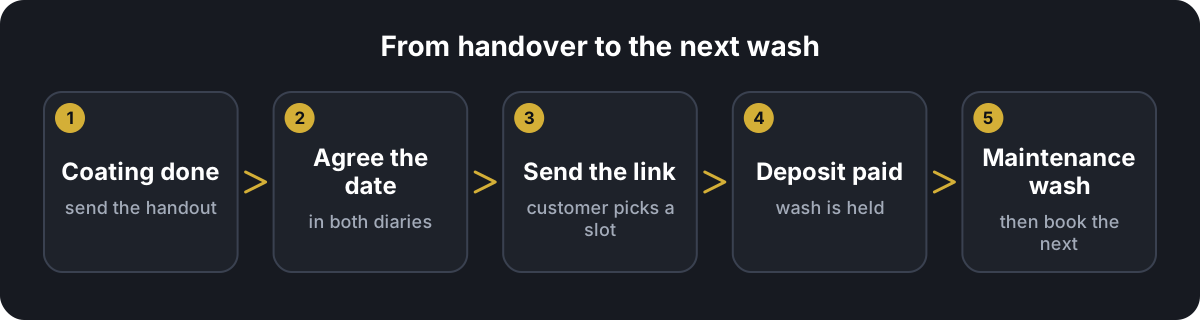
Before the customer drives off, open your diary and agree the first maintenance wash date out loud. Put it in their phone calendar and yours while they watch, then send the handout with the date in a WhatsApp message. When the interval comes round (two weeks for a coated daily driver, four for a garaged car), a short message referencing the checklist does the selling for you: "Your coating's due its first maintenance wash. I've got Saturday 10am or Tuesday 4pm."
Taking the booking and deposit
A reminder that ends in "let me know" turns into a DM thread, then a maybe, then a no-show. Send your booking link instead: they pick the slot, pay the deposit, and the wash is held. The deposit converts a vague intention into a calendar entry with money behind it, which is the difference between a customer who means to book and one who has booked. A deposit of around a third of the wash price is one way to start; set whatever suits your prices.
What does DetailersEye do for repeat washes, and what is left to you?
Every plan gives you a booking link with deposits you set, no platform fee on bookings, and email confirmations and reminders for the bookings that are made. The free plan has no time limit and is capped at 30 bookings a month and 5 services, which covers a solo detailer's repeat washes. Pro adds Client Radar, which shows who is due a service, and automated follow-up and rebooking messages, so a rebooking nudge can go out without you typing it each time.
The honest gap: the aftercare handout itself is yours to write and send. DetailersEye holds the slot and takes the deposit once the customer follows your link, but it does not know which coating you applied or what the maker's warranty says. Keep the handout as a saved note, and review it against the warranty wording each time you switch coating brands.
Sources and further reading
- Citizens Advice: Cancelling a service you've arrangedExplains the 14-day cooling-off period for services booked online or away from the business's premises, and how deposits are treated.
- GOV.UK: Consumer rightsWhere customers can get help with problems with a service, and the advice helplines in England, Wales, Scotland and Northern Ireland.
Common questions
Can my customer take a ceramic coated car through a hand car wash?
Only if the hand wash follows the same rules as a home wash: pH-neutral shampoo, clean mitts, two buckets, and plush drying towels. Many hand wash sites use dirty rags, wash-and-wax shampoo, or terry cloths, all of which mar the coating. Tell customers to ask what products the site uses, or to book the wash with you instead.
Does an automatic car wash void ceramic coating warranty?
Often, yes. Most coating warranties make a proper wash routine a condition of cover, and brush washes are usually on the banned list because they cause swirls and marring. Check the wording of the warranty you give. If your handout names automatic washes as prohibited and the customer uses one anyway, you have written evidence they were told.
What shampoo is safe on ceramic coating?
A pH-neutral shampoo with no added wax or gloss enhancers. Harsh, detergent-heavy formulas and wash-and-wax products can strip the coating surface and dull the gloss. Name the exact bottle on your handout rather than writing "pH-neutral shampoo", because a customer given a category will grab whatever is on the shelf. Selling the bottle from your own stock solves both problems.
How soon after coating can the first wash happen?
Check the manufacturer's cure guidance before booking anything. Most coatings need time to fully cure before the first wash, and the safe window differs by product. Agree the first maintenance wash date at handover with the cure window factored in, so the diary entry lands after the coating has properly hardened.
Do I need to top up the coating with a silica booster spray?
Not strictly, but a silica booster spray is worth listing on the handout as one of the five maintenance wash products. It refreshes the hydrophobic layer and helps the coating keep beading between washes. Keep the product list short so customers actually buy it, and name the specific booster you sell so every wash reminds them where it came from.