
Key takeaways
- A solo UK mobile detailer keeps roughly £45 to £95 per full valet after fuel, chemicals and payment fees, before fixed costs and their own wage.
- At £45 profit per job, about 14 jobs a month covers roughly £600 of fixed costs; a £120 job with £25 of costs leaves £95 and breaks even at 7 jobs a month.
- No specific trade licence is needed in the UK, but you must register for Self Assessment with HMRC once your gross self-employed income passes £1,000 in a tax year.
- Deposits turn no-shows from pure lost margin into paid slots, which matters more than any supply-cost saving.
- Fleet contracts usually pay less per car than retail jobs, but they fill weekdays, cut travel and make no-shows far less likely.
So, is a mobile car detailing business profitable?
Yes, at typical UK solo pricing, but only once you know what each full valet actually costs you. The short version: charge £60 to £120 per job, subtract fuel, chemicals, water and payment fees, and you keep roughly £45 to £95 per detail before fixed costs and your own wage. Price your services properly first, then count jobs: the maths is in how to price a mobile detail.
What does a mobile detail actually cost you per job?
Every full valet has variable costs that come straight out of the job price. Work them out per job, not per month, because a £40 mini valet eats a different share than a £120 full valet.
Fuel and mileage
A round trip of 20 miles at roughly 25p per mile in fuel and wear is about £5. Log your actual miles for a week and use your real number, not a guess. If you quote by postcode, jobs on the edge of your radius cost more before you pick up a hose.
Water, power and chemicals
Water comes from your tank, filled at home, so it is pennies. Power for a pressure washer or vacuum is a few pence per job if charged at home. Chemicals are the real line: dilution rates matter, and a full valet might use £3 to £6 of product depending on how heavy-handed you are. Consumables like towels, dressings and refills add another £1 to £2.
Payment and booking fees
Bank transfer costs nothing, which is why most solo detailers use it. Card payments typically run a percentage plus a small fixed fee, so allow £1 to £2 on a full valet. A deposit taken at booking costs a small percentage too, but it protects you from no-shows, which cost far more than the fee. You can see more cost breakdowns in the guides for mobile car detailers.
Your per-job cost sheet
| Line item | Your figure |
|---|---|
| Fuel and mileage | £ |
| Chemicals | £ |
| Consumables | £ |
| Water and power | £ |
| Payment fee | £ |
| Variable cost per job | £ |
Fill this in with your own numbers. If your variable cost per full valet lands around £10 to £15, the rest of the job price is your margin for fixed costs and your time.
Which fixed costs hit you before your first customer?
Registration and licensing in the UK
There is no specific mobile detailing licence. You do need to register for Self Assessment once your gross income from self-employment passes £1,000 in a tax year, by 5 October in the following tax year. It is free and done online, and the GOV.UK trading allowance guidance explains the rules. Budget £0 upfront here.
Insurance
Public liability cover for a one-person mobile operation commonly costs around £100 to £300 a year. If you carry customers' keys or work on dealer forecourts, check the policy wording before you buy.
Equipment and van setup
Equipment is where your real startup money goes, and it is worth separating one-off purchases from monthly running costs, because they behave differently. A pressure washer, wet/dry vac, polisher, generator or inverter, and a starter chemical kit can land anywhere from about £1,500 for secondhand gear to £4,000-plus new; treat any figure here as illustrative and price your own list. Then add the monthly layer: van or car insurance, fuel even before jobs, and phone data for taking bookings. Once the kit is bought, your fixed base is roughly insurance plus fuel plus data, which is the number your booking link has to beat. Tools like DetailersEye sit on the free plan at this stage, so software costs nothing until the diary fills.
Costs you can claim against income are covered in GOV.UK: expenses if you're self-employed.
How many jobs per week do you need to break even?
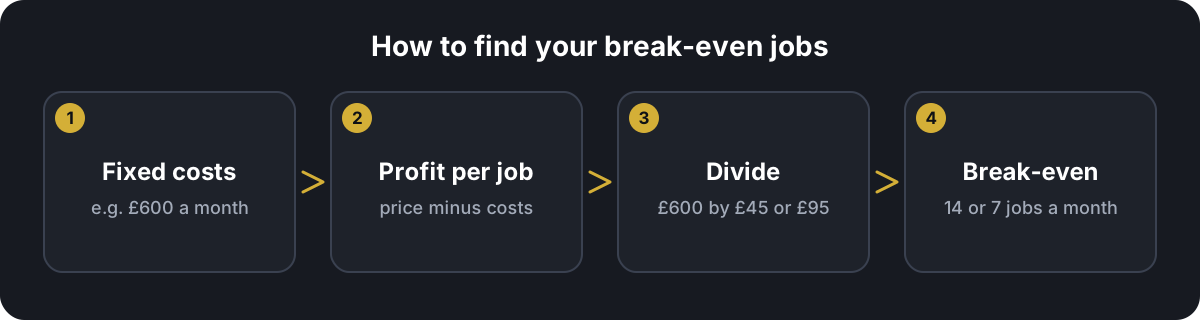
Take the fixed costs from the previous section, say £600 a month covering insurance, van running costs and software. Divide that by your margin per job and you have your break-even point.
At a £60 full valet with roughly £15 in fuel, supplies and fees, you keep £45 per job. £600 ÷ £45 is about 13.3, so 14 jobs a month, or 3 to 4 a week. That covers your fixed costs. Every job after that is profit before your own wage.
At a £120 job with £25 of costs, you keep £95. Now break-even is £600 ÷ £95, roughly 7 jobs a month, or 2 a week. Same van, same hours per job, but fewer bookings needed because the margin is fatter.
Two things move this number fast. Raising prices does more than cutting supply costs, because the margin gain is multiplied across every job. And no-shows hurt more than they first appear: a missed slot is pure lost margin, not just lost revenue, which is why deposits matter so much at this stage.
What margins should a solo detailer vs a two-van operation expect?
A solo detailer keeps most of each job's price as margin before fixed costs and their own time: variable costs of £8 to £15 on a £60 to £80 job leave the bulk of it. Add a second detailer and the picture changes fast. A £25,000 to £30,000 wage plus a second van (finance, insurance, fuel) eats roughly £30,000 to £35,000 a year, so your second pair of hands must bring in £600 or more a week just to pay for itself. Insurance for a second van is a real line item that varies widely by age, postcode and claims history, so get quotes before you commit. Scheduling overhead also grows: two diaries, weather reschedules and deposit-chasing stop being a five-minute evening task. That is where a booking tool earns its keep; DetailersEye holds slots with deposits and has no platform fee, though its Free plan caps at 30 bookings a month, which a two-van operation will outgrow.
When trade and fleet work is worth it
Fleet contracts trade margin for volume: expect less per car than a retail job, but you fill weekdays, cut travel by batching cars on one site, and make no-shows far less likely. One regular fleet day a week can cover your fixed costs before you sell a single retail full valet.
How does mobile detailing profit compare to a fixed shop?
A fixed shop trades fuel for rent. You pay for a unit every month whether the diary is full or empty, plus rates, utilities and insurance on the premises. A mobile detailer pays per job: fuel, water, and drive time. When bookings are thin, the shop's overhead keeps burning; yours mostly stops.
The trade-off is catchment. A shop pulls from whoever drives past or searches locally. Mobile work is limited by how far you'll drive before the travel eats the margin on a full valet.
Mobile also caps output. One van, one detailer, one job at a time. A shop can run two bays. So mobile wins on overhead and loses on ceiling, which is why it suits a solo start better than a two-van operation.
When does mobile detailing stop being a good business?
The numbers can look fine on a spreadsheet and still fail in practice. Four things quietly eat the margin: underpricing full valets to win DMs, no-shows on unpaid slots, rain days with no income, and diary admin spread across WhatsApp, texts and bank transfer chasing that eats hours you never bill for.
No-shows and weather: the two margin killers
A missed booking costs you the slot, not just the time. If a £60 job carried £18 in fuel and consumables, that is sunk before the customer fails to show, and you cannot resell a Saturday morning at 9am. Price travel into every quote using a defensible per-mile figure rather than absorbing it, and log your real miles so the number reflects your van, not a guess.
Deposits fix most of this. Take £20 up front through a booking link and a no-show becomes a paid slot instead of a loss. Weather gaps are harder, but a diary you can actually see lets you backfill cancellations from your waiting list the same day (see weather and rescheduling for mobile detailers). If you are still juggling DMs and a spreadsheet, that admin time is the margin leaking out.
Unpaid slots and DM admin are the problem DetailersEye is built around: one booking link, a deposit you set to hold the slot, and no platform fee on bookings. The free plan's 30 bookings a month fits a solo detailer testing whether the numbers work. Where it falls short: it will not conjure demand, so a quiet week is still a quiet week.
How do you turn a profitable side hustle into a full-time plan?
A one-page plan you can fill in tonight
Write down three numbers: your weekly break-even from the earlier sections, your target jobs per week above it, and the date you want to go full-time. A solo detailer clearing, say, £60 profit on a full valet needs roughly 8 jobs a week to take home £2,000 a month, and closer to 10 once the £600 of fixed costs is added. That's two a day, five days a week.
Build a pricing ladder: a maintenance wash at the bottom, a mid-tier interior-plus-exterior, and a full valet at the top. Push most bookings toward the middle tier.
Then replace the DMs, WhatsApp threads, and spreadsheet with one booking link that takes deposits, so a slot is held the moment someone books. DetailersEye's free plan covers 30 bookings a month with no time limit, which fits a side hustle; the paid step only makes sense once you're past those caps. Upgrade tools when the diary, not ambition, forces it.
Sources and further reading
- GOV.UK: Working for yourselfWhen working for yourself means reporting income to HMRC, and where to start.
- GOV.UK: Tax-free allowances on property and trading incomeThe £1,000 trading allowance, and why gross self-employed income above it means registering for Self Assessment.
- GOV.UK: Expenses if you're self-employedWhich business costs, including travel, a sole trader can deduct when working out taxable profit.
Common questions
How much can a mobile detailer earn in the UK per month?
It depends on your price, your costs and how full your diary is. At £45 profit per job, 8 jobs a week is about £1,560 a month; at £95 profit per job, it is about £3,290 a month. Subtract your fixed costs (around £600 in our example) and your own tax. The ceiling depends on price and no-shows more than anything else.
Do I need a license to wash cars at customers' homes in the UK?
No specific trade licence is required for most mobile detailers. You must register for Self Assessment with HMRC once your gross self-employed income passes £1,000 in a tax year, which is free and done online. Also check where your wash water goes: it must not run into surface water drains.
What insurance do I need for a mobile car detailing business?
Public liability cover is the core policy, commonly costing around £100 to £300 a year for a one-person operation. If you carry customers' keys or work on dealer forecourts, read the policy wording before buying, as standard cover may exclude those situations. Once you add a second detailer and van, get separate quotes before you commit.
Is mobile detailing a good side hustle alongside a full-time job?
Yes, because the fixed base is small: insurance, van running costs and a booking tool, with equipment bought once. At £60 profit per full valet, two jobs a weekend adds roughly £480 a month. The main friction is weather and no-shows eating your only free days, so taking a £20 deposit on every slot matters even more when your diary is thin.