
Key takeaways
- A mid-size van like a Transit Custom offers the best balance of load space and payload for a full detailing kit.
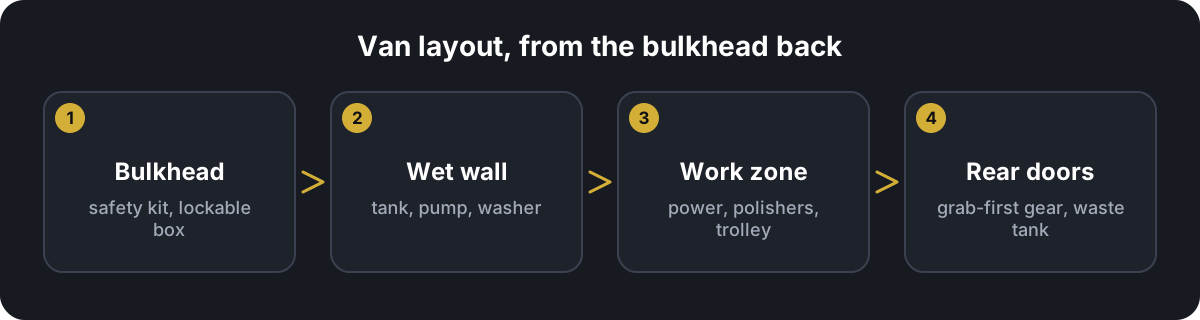
- Zone the van layout from the bulkhead back: wet wall on one side, power and polishers on the other, grab-first gear at the rear doors.
- A 100-litre water tank covers a day of solo work, but water weighs 1kg per litre, so check your payload plate first.
- Dirty wash water is trade effluent and must never go down surface drains; catch it in a sealed tank and dispose of it properly, through a foul drain with your water company's permission or a registered waste carrier.
- A starter equipment setup costs under £1,500, mid-level £1,500 to £4,000, and pro builds start at £4,000, excluding the van.
Which van should you buy for a mobile detailing setup?
A solo UK detailer taking bookings through Instagram DMs and WhatsApp can start from a compact panel van or even a car plus a trailer. Match the van to your budget and how much kit you carry: a full valet setup with a pressure washer, water tank and generator needs more room than a basic wash-and-vac kit.
Compact panel vans: Berlingo, Partner, Caddy
Compact vans fit a starter kit and cost less to run. Expect around 3.3 to 4.1m³ of load space, so plan your layout carefully if you add a 100-litre water tank later.
Mid-size vans: Transit Custom, Vivaro, Trafic
Mid-size vans offer roughly 5.8 to 6.8m³ and are tall enough to stand at the back door. This is the sweet spot for a detailer carrying a tank, generator and shelving who does trade or fleet work.
New, used, or your current car plus a trailer
| Option | Rough cost | Trade-off |
|---|---|---|
| Car + trailer | £1,000 to £3,000 used | Cheapest start, slower to load |
| Used compact van | £4,000 to £8,000 | Lower mileage left, no warranty |
| Used mid-size van | £8,000 to £15,000 | Room to grow, watch for rust |
| New mid-size van | £25,000+ | Warranty, but heavy finance for a side hustle |
Whatever you carry, secure it properly. The DVSA's guidance on securing loads applies to vans used by tradespeople and warns that unsecured loads can increase the risk of rollover and affect handling and braking, so strap or bracket everything before your first job. Once the van is sorted, take deposits through one booking link so the slot is held before you drive. DetailersEye is booking software for mobile car detailers.
What equipment do you actually need in a mobile detailing van?
Everything runs off the van, so the kit splits into must-haves you buy once and consumables you restock monthly.
Washing and decontamination kit
A pressure washer, foam lance, two buckets with grit guards, wash mitts, drying towels, wheel brushes, iron remover and tar remover cover the wash. A water tank or water-fed system matters if you work where there is no outside tap.
Machine polishing and interior kit
A dual action polisher, pads, compound and sealant handle correction work. For interiors: a wet/dry vacuum, interior brushes, upholstery cleaner and glass cleaner. Steam is a nice-to-have that earns its space once you take on full valets.
Consumables you restock monthly
Shampoo, chemicals, towels, dressings and bin liners run out fastest. Budget roughly £50 to £100 a month at starter level, though this is illustrative and varies with how many cars you do.
Once the van earns money, put bookings on a proper diary instead of WhatsApp. See the other guides for mobile car detailers.
How should you zone the layout of a mobile detailing van setup?
Work from the bulkhead backwards and give every item a fixed home, so nothing migrates into the footwell by week three. The wet stuff lives on one side, the power and polishers on the other, and the rear doors hold the stuff you grab first.
Zone 1: bulkhead and cab-over storage
The bulkhead is the one wall you can bolt anything to without losing floor space. Mount your first-aid kit, fire extinguisher, hand-wash station and a lockable box for cash, cards and paperwork here. Cab-over shelving takes the things you never need mid-job: spare towels, stock of chemicals, winter kit.
Zone 2: the wet wall
Water tank, pump and pressure washer go on the passenger side, closest to the bulkhead, so heavy weight sits forward and over the axle. Keep the tank low and strapped; a full 350-litre tank shifts hard in a corner. Run chemical bottles in a shallow tray above the tank so drips fall where you can hose them out.
Zone 3: the work zone
Generator or inverter, polishers, pads and your trolley occupy the driver side. Mount polishers on quick-release brackets so you can lift one straight out rather than digging through a bag. Keep a clear walkway between the wet wall and work zone; you will carry a full bucket down it a hundred times a day.
Zone 4: rear doors and racking
The last metre is for the gear you use first at every job: hoses, extension leads, wheel brushes, the trolley if it stows flat. Fit a racking bar across the door opening for hose and cable hooks, and keep the floor behind the rear axle for the waste tank and the dirty-water container. GOV.UK treats vehicle washing wastewater as trade effluent, which must not run into a surface water drain, so plan where you will empty the waste tank before you fill the water tank.
Flooring, lining and securing loads
Ply-line the walls and floor before you fit anything, then add a rubber floor over the ply so spills wipe out. Every item over a few kilos gets a strap, bracket or lipped shelf, because an unsecured tank or generator can still shift forwards or add to rollover risk when you brake or corner. Once the van is earning, price your jobs to cover the setup, including the deposit rules that protect your diary: see how to price a mobile detail.
How do you get power and water in a cargo van mobile detailing setup?
Power: onboard battery, inverter, or generator
Three setups work. A leisure battery (or two) with an inverter runs your vacuum, polisher and pump, and recharges from the van's alternator or a shore charger. A small petrol generator gives unlimited runtime but adds weight, noise and fumes. A split system (battery for the pump and lights, generator only for high-draw kit) suits most solo detailers. Illustrative costs: a 110Ah leisure battery starts around £80, a 1000W inverter around £60, a small inverter generator from £300.
Water: tank size, 12v pump and a water filter
A full valet on an average car uses roughly 40 to 80 litres, so a 100-litre tank covers a day of solo work. Pair the tank with a 12v diaphragm pump (about £40 to £60) and a basic inline filter to keep grit out of your pressure washer. Refill at home, a customer's outside tap (ask first), or a bulk water station.
Weight and payload maths you must do first
Water weighs 1kg per litre, so a full 100-litre tank plus battery, generator and gear can eat a third of a typical cargo van's payload. Weigh everything, check your van's plate, and book your conversion in before the kit goes in. A diary that holds deposits per slot keeps the van earning once it's built; see our guide on no-shows and deposits for mobile detailers.
What does a mobile detailing van setup cost at starter, mid, and pro budgets?
Prices below are illustrative UK bands for equipment only, excluding the van. Whatever you spend, check your payload first: payloads vary a lot by model and variant, so weigh your tank, generator and gear against the figure on your van's plate.
Starter: under £1,500
An entry pressure washer (£100 to £200), a 100L baffled water tank (£80 to £120), two buckets with grit guards (£30), a basic vacuum (£100 to £150), and hand kit: mitts, towels, APC, snow foam, a wax or sealant (£200 to £300). Add a 12v socket extension and a folding table. This covers a full valet on one tank for one or two cars a day.
Mid: £1,500 to £4,000
Upgrade to a petrol pressure washer or 110v unit with an inverter or leisure battery (£500 to £1,000), a wet/dry vacuum (£150 to £300), a rotary or DA polisher with pads and compounds (£300 to £500), a water filter or deionising setup (£150 to £400), and shelving plus a racking system (£200 to £500).
Pro: £4,000 and up
A pure water system, twin-tank setups, a generator or 240v inverter system, steam cleaner, hot water pressure washer, and full racking with lighting. Solo detailers on any tier should price the admin side too: DetailersEye's free plan covers 30 bookings a month with deposits and no platform fee, and the accessibility statement covers how the booking link works for every customer.
What are the most common mistakes in a mobile detailing equipment setup?
Most van builds fail for the same three reasons, and none of them are about the polishers. Detailers spend the first £2,000 on machines and the last £200 on the things that keep the van legal and dry: strapping, floor sealing and payload maths. The result is a van that looks the part on Instagram but fails on three practical tests. Can you stand at the rear doors and reach everything in one step?
Does the tank stay put under a 30mph emergency stop? And can you empty the waste water without a customer watching it go down a kerb drain? Fix those three before you buy anything with a motor in it, because every one of them is cheaper to solve at layout stage than after the racking is bolted in.
Buying the pro kit before the diary needs it
A £2,000 polisher and full ceramic loadout earns nothing while your diary runs off DMs and a spreadsheet. Start with gear that covers a full valet safely, then add as repeat bookings pay for it. If you already have steady work, booking tools such as DetailDeck or Urable exist for the same job, so match spend to demand.
Ignoring payload and weight distribution
Water is the silent killer. A 100-litre tank alone adds 100 kg, before a pressure washer, generator and consumables. Overload a small van and you risk handling problems, premature brake wear and an MOT or insurance issue. Check your van's payload plate and keep heavy items low and forward of the rear axle.
Loose gear and water damage
An unsecured tank or machine becomes a projectile under hard braking. Bolt everything down, strap loose hoses, and seal around any tank or plumbing penetration. One leak soaking your floor ply costs more than the fitting kit you skipped.
What UK legal and insurance checks apply to a mobile detailing van conversion?
Insurance: van, equipment and liability
A standard van policy may not cover your pressure washer, generator and polishers, so check for tools and equipment cover and declare the conversion. Many policies set a per-item and total limit for tools left in the vehicle. Also confirm public liability, since you're working on customers' property.
Waste water and drain regulations
Dirty wash water from vehicle washing is trade effluent, so never drain it to a road gully or kerb. GOV.UK explains that surface water drains discharge directly to the environment, and that contaminated water must go to a foul drain with your water company's permission or be removed by a registered waste carrier. Catch wash water in a sealed tank and decide how you will dispose of it before the first job.
Load securing basics
Secure tanks, generators and shelves so nothing shifts under braking. The DVSA's guidance on securing loads applies to vans used by tradespeople. It says to load heavy items against the bulkhead where possible, to secure large or heavy items to the vehicle, and not to store work tools or gas cylinders in the cab. Ratchet-strap heavy items to anchor points and keep weight low and forward.
How do you turn a finished van into actual bookings?
Price each service so the van pays for itself
Work backwards from your costs. A full valet that takes three hours needs to cover diesel, water, chemicals, insurance, and the van payment, plus your hourly rate. If the numbers only work at £25 an hour, you have priced yourself into a hobby. Write the price on your booking link so nobody haggles in the DMs.
Take deposits so a full diary stays full
A no-show costs you the slot, the fuel, and the drive. A deposit of £20 to 30 on a full valet filters out tyre-kickers and holds the slot the moment someone books. Confirm the balance by bank transfer on the day, and keep a simple cancellation rule in writing: deposit non-refundable inside 48 hours.
One booking link instead of DMs and a spreadsheet
Put one link in your Instagram bio and pin it in WhatsApp. Customers pick a service, choose a slot, pay the deposit, and the diary updates itself. DetailersEye does this with no platform fee on bookings and a free plan capped at 30 bookings a month and 5 services, which fits a solo detailer's early months. Other booking tools, such as DetailDeck and Urable, are worth comparing: check their current prices and fees on their own sites, pick whichever fits your prices and payment flow, then stop chasing texts.
Sources and further reading
- GOV.UK: Pollution prevention for businessesWhy vehicle washing wastewater is trade effluent, why surface water drains must only take clean water, and the foul drain and waste carrier options.
- DVSA: Securing loads on HGVs and goods vehiclesHow to load and secure goods in vans used by tradespeople, including loading against the bulkhead and not keeping work tools in the cab.
Common questions
Can I start a mobile detailing business with just a car and no van?
Yes. A used car plus a trailer is the cheapest route, typically £1,000 to £3,000 secondhand, and suits a basic wash-and-vac kit. The trade-off is slower loading and less room if you later add a water tank or generator. Secure every item properly so nothing shifts under braking on the way to a job.
How big a water tank do I need for a full valet?
A full valet on an average car uses roughly 40 to 80 litres, so a 100-litre tank covers a day of solo work on one or two cars. Water weighs 1kg per litre, so check your van's payload plate before fitting anything larger. A baffled tank keeps the load stable, and plan where you will legally empty the dirty water.
Do I need a generator or can I run everything off a leisure battery?
For most solo detailers, a split system works best: a leisure battery and inverter running the vacuum, polisher and pump, with a small generator reserved for high-draw kit. A battery-only setup is quieter and cheaper, starting around £80 for a 110Ah battery plus roughly £60 for a 1000W inverter, but runtime is finite.
How much does it cost to convert a van for mobile detailing in the UK?
Equipment only, excluding the van: a starter setup comes in under £1,500 with an entry pressure washer, 100-litre tank, basic vacuum and hand kit. Mid-level runs £1,500 to £4,000, adding a DA polisher, wet/dry vacuum, water filter and racking. Pro builds start at £4,000. Budget £50 to £100 monthly for consumables on top.