
Key takeaways
- A lean mobile detailing setup from your own car costs roughly £300 to £600 in gear, a van-based rig starts around £3,000, and a premium trailer can exceed £15,000.
- Public liability insurance for a solo mobile detailer commonly costs around £100 to £300 a year, and registering with HMRC for Self Assessment is free.
- Break-even is startup spend divided by profit per job: a £500 lean setup needs about 13 paid jobs at £40 profit each, while a £10,000 van setup needs around 250.
- Underpricing stretches break-even fast: at the same costs, a £60 full valet leaves a quarter of the profit of a £90 one.
- Free booking software with deposit-taking, such as DetailersEye's free plan capped at 30 bookings a month, prevents no-shows and keeps startup admin costs at zero.
How much does it cost to start a mobile detailing business?
Three tiers, roughly: a lean setup from your own car starts around £300 to £600 in gear, a mid-tier setup with better kit and branding runs £800 to £1,500, and a van-based rig starts in the thousands once you factor the vehicle, wrap and fit-out. Those are equipment figures. Your fixed costs on top are smaller but non-negotiable, like insurance and sorting your tax position with HMRC, which is free to register for through Self Assessment on GOV.UK.
| Tier | Rough startup cost | What it gets you |
|---|---|---|
| Lean (own car) | £300 to £600 | Core kit, first products, free booking tools |
| Mid-tier | £800 to £1,500 | Better machine, branding, paid tools |
| Van rig | £3,000+ | Vehicle, wrap, racking, water and power |
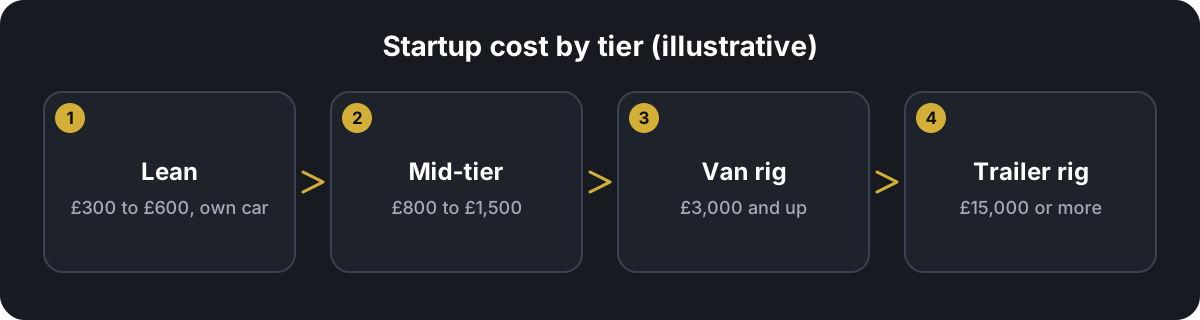
Software is the cheapest line here: DetailersEye's free plan (30 bookings a month, 5 services) covers your diary and deposit-taking until you outgrow it.
How much does it cost to start a mobile detailing business at the leanest possible level?
Working from your own car, the leanest realistic startup budget is roughly £300 to £600. That covers a wet/dry vac, two buckets with grit guards, a wash mitt, microfibre towels, and a starter set of chemicals: snow foam, shampoo, wheel cleaner, interior cleaner, and a spray wax or sealant. Prices vary by brand, so treat these figures as illustrative and price your own kit before committing.
What you can skip in month one
Skip the pressure washer if you can access one cheaply or borrow one. Skip polishers, a steamer, a water tank, and any van wrap until paid jobs justify them. Skip booking software spend too: a free plan like DetailersEye's handles your booking link and deposits at up to 30 bookings a month before you ever pay. Set your prices first using our guide on how to price a mobile detail so every job funds the next piece of kit.
The hidden cost of starting too lean
Going under about £300 usually means buying disposable kit twice: cheap vacuums die, thin towels shed, and diluted chemicals cost more per wash. There's a customer cost too. Turning up without enough water or a proper drying towel shows in the finish, and a full valet that disappoints costs you the repeat bookings a solo detailer lives on.
What equipment costs are essential versus optional for a mobile detailer?
Essential kit
Start with a pressure washer, a wet-and-dry vacuum, buckets, wash mitts, drying towels, and consumables: shampoo, APC, wheel cleaner, glass cleaner, and a decent wax or sealant. Realistic UK price bands are illustrative, but expect roughly £150 to £350 for the washer and vacuum combined and £50 to £100 to fill your chemical shelf for the first month. Add a hose, a 12V or battery-powered setup if you cannot rely on customer power, and a sturdy box or crates to keep the boot organised. That is genuinely most of what a first full valet needs.
One thing worth budgeting early is insurance, because a pressure washer near someone's paintwork is a real risk. Public liability cover for a solo mobile detailer commonly costs around £100 to £300 a year depending on cover level and claims history, so get several quotes and read what is excluded. Treat it as essential kit, not an optional extra, before your first paying job.
Optional kit worth buying after your first ten regulars
Hold off on a dual-action polisher (£150 to £300), a steamer (£200+), a generator (£300 to £600), and a baffled water tank (£100 to £250) until repeat customers justify them. Take those jobs through your booking link at DetailersEye so deposits cover the upgrade, not the other way round.
How much should you budget for a van or trailer setup versus working from your own car?
Your car boot setup costs nothing upfront beyond kit, and it works fine for a side hustle doing two or three full valets a weekend. The trade-offs are water capacity, power, and turning up to jobs looking like a hobbyist. A used small van, typically £2,000 to £6,000 in the UK, gives you racking, a 100 to 300L tank, and a generator or inverter. A trailer or dedicated rig can run to £15,000 or more and only makes sense once you're running bigger jobs or fleet work.
When the upgrade from car to van actually pays for itself
The maths is simple: if a van adds roughly one extra job a week because you carry more water and skip the refill run, that's £50 to £150 of extra weekly takings. Once running costs come out of that, a £4,000 van takes well over a year to repay. Before you spend anything, get the diary side right, because a van that sits empty between jobs is dead money. Our guides cover holding slots with deposits so booked means booked, whichever vehicle you turn up in. For the build itself, see our mobile detailing van setup guide.
What licensing, insurance, and legal costs does a mobile detailer need to plan for?
Do you need a licence to wash cars in the UK?
No specific licence is needed to wash cars, but where the wash water goes matters. Water from washing vehicles is classed as trade effluent and must not go down surface water drains, which only take clean water. Read the GOV.UK pollution prevention guidance before your first job, because the options (a foul drain with permission, or collecting the water and using a registered waste carrier) can add cost.
The real annual costs are elsewhere. Public liability insurance for a solo mobile detailer commonly runs around £100 to £300 a year, depending on cover level. Registering for Self Assessment is free, and many banks offer a free basic business account.
Budget roughly £100 to £300 in year one for insurance, plus whatever your wash-water setup needs. Tools like DetailersEye keep the booking side free to start, so you know what you'd pay before you commit.
How should you promote a mobile detailing business before spending on paid ads?
Your first marketing budget is zero. Post before-and-after photos of every full valet on Instagram, drop the same shots on WhatsApp status, and set up a free Google Business Profile so you show up when someone searches "mobile detailer near me". Local Facebook groups and neighbourhood chats do the rest.
Turning DMs into booked, paid slots
The cheapest promotion fails if the booking process leaks. Someone messages "how much for a full valet?", you reply with a price, they say "I'll get back to you", and the slot stays empty. A booking link ends that: they pick a time, pay the deposit, and the diary is filled without you typing a word. Deposits also kill most no-shows, which cost you the drive and the day's best hours.
DetailersEye includes this on the free plan, capped at 30 bookings a month, with no platform fee per booking. Paid ads only make sense once that link converts reliably.
How much can a mobile detailing business make in its first year at each startup tier?
Revenue comes down to jobs per week and price per job. UK full valets commonly sell for roughly £50 to £100 for a standard car (see our guide to car valeting prices), and maintenance washes sell for less. The scenarios below use a deliberately cautious blended average of £45 a job across both, and they are illustrative, so adjust to your own prices.
Side hustle versus full-time diary
At the leanest tier, say 4 jobs a week at £45, that is roughly £9,400 gross a year. Subtract consumables, fuel and insurance and you might clear £5,000 to £6,000, which comfortably repays a sub-£1,000 startup spend.
At the van tier, 12 to 15 jobs a week gets you £28,000 to £35,000 gross. Running costs are heavier: fuel, van maintenance, consumables, insurance, maybe £8,000 to £12,000. A net profit of roughly £16,000 to £27,000 in year one is realistic, but a van setup of £5,000 to £10,000 means year one is often about getting close to break even, not banking profit.
The gap between tiers is diary density, not equipment. A solo detailer filling weekends can match a part-time van's margin without the debt.
When does a mobile detailing business typically break even on its startup costs?
Break-even is a simple sum: startup spend divided by profit per job. If you started lean at around £500 and clear £40 after costs on a £90 full valet, 13 paid jobs cover it. A mid-tier setup nearer £1,500 needs roughly 38 jobs, and a van-based setup at £10,000 needs around 250 before you're ahead. At two to three valets a week, that's roughly five weeks, four months, and two years respectively.
Three things push break-even later. No-shows: a slot that sits empty after a DM booking that never confirms is money you'll never invoice, which is why taking a deposit through a booking link matters. Underpricing: if your costs stay the same, every £10 off the price comes straight out of the £40 profit, so a £60 price leaves £10 and the same £500 setup takes about 50 jobs to repay instead of 13. And buying gear too early: a £600 polisher before you've sold ten details just raises the bar you have to clear.
Sources and further reading
- GOV.UK: Register for Self AssessmentHow a sole trader registers with HMRC for Self Assessment, and the 5 October deadline after the tax year in which self-employment started.
- GOV.UK: Working for yourselfWhen working for yourself means reporting income to HMRC, and where to start.
- GOV.UK: Pollution prevention for businessesWhy vehicle washing wastewater is trade effluent, why surface water drains must only take clean water, and the foul drain and waste carrier options.
Common questions
Can I start a mobile detailing business with just £500?
Yes. A lean setup from your own car fits inside roughly £300 to £600: a wet/dry vac, buckets with grit guards, mitts, towels, and a starter chemical shelf. Below about £300 you risk buying disposable kit twice, so spend the full amount. Free booking tools and free HMRC registration keep everything else at zero.
Do I need a van to run a mobile detailing business, or can I use my own car?
No. A car boot setup works fine for a side hustle running two or three full valets a weekend. The trade-offs are water capacity, power, and looking like a hobbyist. A used small van, typically £2,000 to £6,000, pays back only if it adds roughly one extra job a week to your diary.
How much should I charge for a full valet to cover my costs?
UK full valets commonly sell for roughly £50 to £100 for a standard car, depending on size and condition. Check local competitors and work backwards from your own costs. Underpricing hurts most: at the same costs, a £60 price leaves a quarter of the profit of a £90 one, so the same setup takes far more jobs to repay.
Is mobile detailing still profitable in the UK, or is the market saturated?
Profitability depends on diary density, not equipment. A lean solo detailer doing four £45 jobs a week grosses roughly £9,400 a year and might clear £5,000 to £6,000 after costs. A van-based full-time diary at 12 to 15 jobs a week can net roughly £16,000 to £27,000 in year one. Repeat bookings matter more than beating rivals on price.
What ongoing monthly costs should I budget for after the initial setup?
Public liability insurance commonly runs around £100 to £300 a year. Add consumables like shampoo, APC, and towels, plus fuel. Registering for Self Assessment costs nothing, and many banks offer a free basic business account. Booking software can stay free until you pass around 30 bookings a month.