
Key takeaways
- You can launch a mobile valeting business for under £1,000 all-in, with the core boot-fit kit costing around £360 to £820.
- Register with HMRC as soon as you start trading (you must once gross income passes £1,000 in a tax year), get public liability insurance, and set up one booking link with deposits before posting anything on Instagram.
- Charge per job type with three starter packages rather than hourly rates, and quote a deposit on every booking to filter out no-shows.
- Your first ten jobs come from neighbours, friends and your Instagram feed, so post one before-and-after set per job with a price in the caption.
- Hire help only when your diary is full two or more weeks out and you are still turning work away, not when you simply feel busy.
What do you actually need before your first job?
Four things: you know your tax position with HMRC so your income is reported properly, you have basic insurance, you own the kit for at least one service you can repeat, and there's one way for people to book and pay you a deposit. That's it. Everything else, a branded van, a full product line, a website, can wait until money is coming in.
Registering is free and done online: register for Self Assessment on GOV.UK. Once that's done, pick a single service, price it properly, and get the diary working before you post anything on Instagram.
What equipment do you need to start a mobile valeting business?
You need enough kit to do a safe full valet from the boot of your car, and nothing more. The first-week shopping list below covers it. Prices are illustrative UK ranges, not quotes.
First-week shopping list with illustrative UK price ranges
| Item | Illustrative range |
|---|---|
| Pressure washer (electric) | £100 to £250 |
| Wet/dry vacuum | £50 to £150 |
| Wash buckets x2 with grit guards | £20 to £40 |
| Snow foam lance and foam | £30 to £60 |
| Shampoo, APC, wheel cleaner, glass cleaner | £40 to £70 |
| Microfibre stash (towels, mitts, applicators) | £30 to £50 |
| Brushes (wheels, vents, trim) | £15 to £30 |
| Drying towels | £15 to £30 |
| Extension lead and hose reel | £30 to £60 |
| Water tanks (25 to 50L) | £30 to £80 |
| Total | £360 to £820 |
The total lands somewhere around £360 to £820 to start, depending on how much you buy new versus second-hand.
What to buy later, not now
Skip the generator, the hot-water setup, the steamer and the polishers until jobs pay for them. A solo detailer booking through DMs and WhatsApp does not need a van racking system on day one either. What you do need early is a way to hold slots without chasing bank transfers by text: a booking link with deposits, like the booking software for mobile car detailers from DetailersEye, stops no-shows eating your kit budget.
How much does it cost to launch a mobile valeting business?
Most solo detailers can launch for under £1,000 all-in, and you can start closer to £500 if you buy secondhand and already own a decent vacuum.
Fixed costs vs per-job costs
Fixed costs are things you pay once or regularly: a pressure washer (£100 to £250 in the list above), a van or boot setup, water tanks, and insurance. Public liability cover for a solo mobile valeter commonly costs somewhere around £100 to £300 a year, so get a few quotes and read what is excluded.
Per-job costs scale with bookings: chemicals (£5 to £15 per full valet), fuel, and your time. Keep a simple spreadsheet of both from day one, because pricing later depends on knowing your real per-job cost. Our guide on how to price a mobile car detail walks through that calculation.
One fixed cost you can skip: booking software. DetailersEye has a free plan with no time limit, so deposits and your booking link cost nothing until you're busy enough to outgrow it.
Do you need a licence or insurance to operate a mobile valeting business?
No specific valeting licence exists in the UK, but you do need to sort your tax position with HMRC and follow the rules on waste water. Public liability insurance is not a legal requirement for a sole trader, but one damage claim from a customer's car can end a side hustle.
Registering as self-employed with HMRC
Register as a sole trader once you start earning. If your gross income from self-employment is more than £1,000 in a tax year, you must register for Self Assessment by 5 October in the following tax year (see the GOV.UK trading allowance guidance). Keep records of every job paid by bank transfer, cash or otherwise, because you'll need them for your tax return.
Water usage and waste water rules
Using a customer's tap is the normal arrangement for solo detailers, but the water you wash a vehicle with counts as trade effluent. It must not go into surface water drains, which only take clean water. Read the GOV.UK pollution prevention guidance before your first driveway job. More setup steps live in the guides for mobile car detailers.
How should you price jobs when you're just starting out?
Charge per job type, not per hour. Customers asking "how much for a full valet?" want one number, and hourly pricing punishes you for getting faster.
Three starter packages, not ten
Keep it simple: a maintenance wash, a mini valet, and a full valet. Price the middle option so it looks like the obvious pick, and set the full valet high enough that you don't resent taking it. Work out your floor first: fuel, products, insurance, and the wage you need, then add margin on top.
Quote a deposit with every booking, even £20, so a no-show costs the customer something and not you. Whatever packages you publish, keep the wording plain enough that someone booking from their phone knows exactly what's included.
How do you get your first paying valeting customers?
Post one before-and-after set per job: same angle, same lighting, four photos and a price in the caption. That caption matters more than reach, because a solo detailer's first customers come from people who already follow you and wanted to know what a full valet costs. Reply to every DM and WhatsApp message within an hour if you can, and save the ones who ask about prices into a broadcast list so your next free slot goes straight to warm prospects.
Your first ten jobs will come from your own street and your own feed, not from ranking anywhere. Offer neighbours a midweek slot at a starter price, ask each one for a Google review before you drive off, and put your booking link in your Instagram bio and WhatsApp status. One job done well on a visible driveway is a local advert that costs you nothing.
Why deposits beat DMs for holding slots
A deposit, even £10 on a £40 valet, filters out time-wasters and makes a no-show cost the customer something. Bank transfer details sent over WhatsApp work at first, but they mean chasing payments and manually marking slots as taken. A single booking link that takes the deposit and confirms the slot removes that chasing, which is exactly the gap DetailersEye's free plan is built to close. Our guide on how to stop no-shows as a mobile car detailer covers the deposit wording that works.
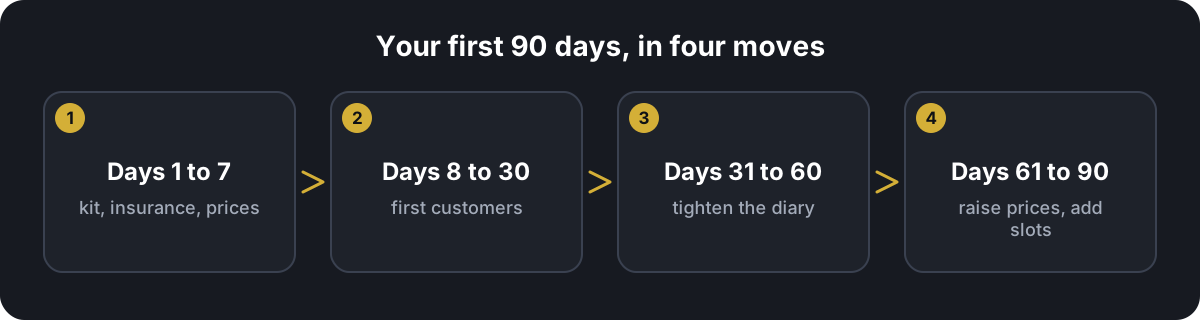
What should your first 90 days look like, week by week?
Days 1 to 7: kit and setup
Buy your kit, sort insurance, and pick a trading name. Get a business bank account so customer transfers do not mix with your personal money. Set your beginner prices and write one message you can paste into Instagram DMs or WhatsApp when someone asks "how much for a full valet?". Take before-and-after photos of your own car so your grid is not empty.
Days 8 to 30: first customers
Post three times a week: a job, a price, and a booking link. Ask friends and family for one paid job each, even at a discount, and photograph every one. Reply to every DM and WhatsApp within an hour if you can. Log every enquiry in a spreadsheet, even the ones that ghost you, because it shows where customers actually come from.
Days 31 to 90: tighten the diary
By now you know which jobs pay and which waste a Saturday. Raise prices on the services people keep asking for. Chase deposits on every booking so no-shows stop eating your week. If you are turning work away, add extra Saturday slots before you even think about hiring.
Which booking tools are worth using at the solo stage?
Judge any booking tool on four things: can a customer book and pay a deposit from one link on their phone, does it stop no-shows, does it work from your existing DMs and WhatsApp, and does the pricing survive a slow month. Run every option against those same tests.
DetailersEye holds slots with a deposit you set, takes bookings from one link, charges no platform fee on bookings, and has a free plan with no time limit capped at 30 bookings a month and 5 services. Where it falls short: those caps bite once you're busier, and it won't replace a full spreadsheet for expenses or stock. Competing tools aimed at detailers exist too, so check each against the deposit and fee questions before committing.
One tax note: if your taxable turnover passes the VAT threshold (currently £90,000), you must register for VAT, so factor VAT into pricing before you pick any paid plan. See GOV.UK: register for VAT.
When should you move from solo valeting to hiring help?
Hire when your diary is full for two or more weeks out and you're still turning work away, not when you feel busy. If you're booked solid but hitting the 30 bookings a month ceiling on the free plan, that's a pricing problem first: raise your full valet price before adding labour.
A second pair of hands only pays if the extra jobs cover their wage plus your van, fuel and product costs. Track profit per job for a month; if it's rising while you're exhausted, hire. If it's flat, charge more.
Sources and further reading
- GOV.UK: Register for Self AssessmentHow a sole trader registers with HMRC for Self Assessment, and the 5 October deadline after the tax year in which self-employment started.
- GOV.UK: Tax-free allowances on property and trading incomeThe £1,000 trading allowance, and why gross self-employed income above it means registering for Self Assessment.
- GOV.UK: Pollution prevention for businessesWhy vehicle washing wastewater is trade effluent, why surface water drains must only take clean water, and the foul drain and waste carrier options.
- GOV.UK: VAT registrationWhen a business must register for VAT, including the £90,000 taxable turnover threshold.
Common questions
Can I start a mobile valeting business with just a car and a bucket?
Not quite. A bucket alone won't produce results customers pay for repeatedly. You need enough kit for one repeatable service: a pressure washer, vacuum, chemicals, microfibres and brushes, which lands around £360 to £820. It all fits in a car boot, so a van can wait until revenue justifies it.
How many bookings should I expect in my first month of mobile valeting?
There's no fixed number, but expect your first jobs to come from neighbours, friends and your existing Instagram followers rather than strangers. Posting before-and-after photos with prices three times a week, replying to DMs within an hour, and offering midweek starter slots to people on your street is what fills an early diary.
Do I need a water tank or can I use the customer's water?
You can use the customer's tap; that's the normal arrangement for solo detailers. A 25 to 50L tank (£30 to £80) is still worth having for jobs where access is awkward. Either way, wash water counts as trade effluent, so never let it run into surface water drains.
Is a deposit worth asking for when customers pay by bank transfer?
Yes. Even £10 on a £40 valet filters out time-wasters and means a no-show costs the customer something instead of costing you a Saturday. Bank transfer details over WhatsApp work at first, but a single booking link that takes the deposit and confirms the slot removes the chasing entirely.
What VAT threshold rules apply to a new mobile valeting business?
You must register for VAT if your taxable turnover goes over £90,000 in the last 12 months, or you expect it to in the next 30 days. Most solo starters won't hit that in year one, but factor VAT into your pricing before choosing any paid booking plan, because a price that works before registration can eat your margin once VAT applies.